
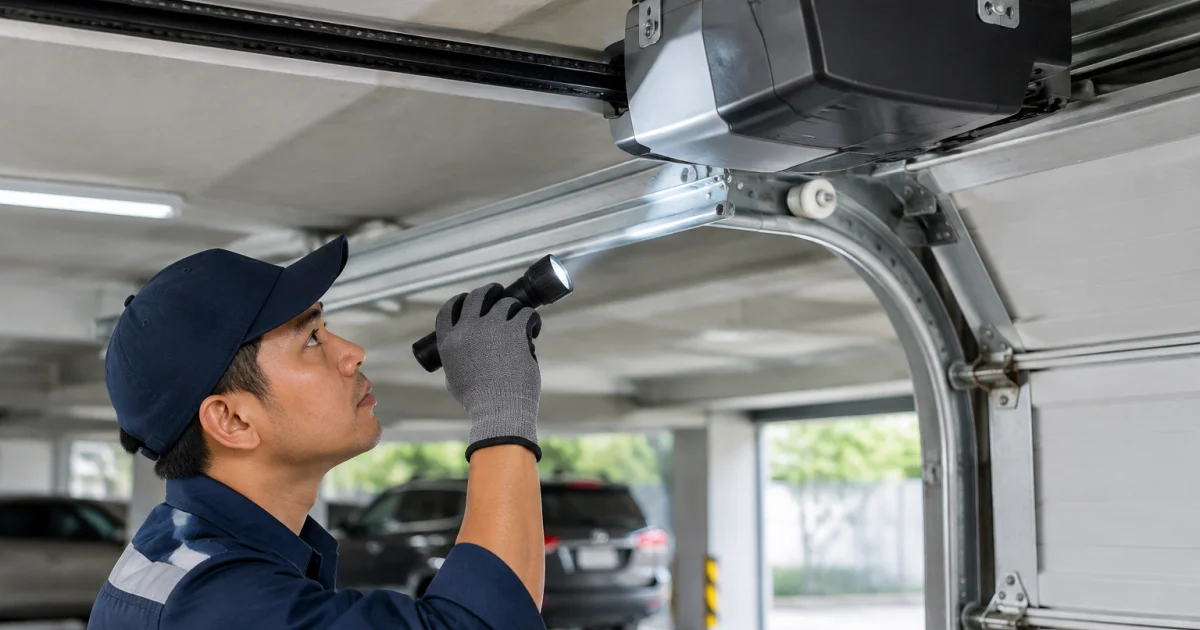
A motorised door failure can halt vehicle flow, delay dispatch, and create safety risks—especially in busy workshops, commercial garages, and industrial facilities. The goal of troubleshooting isn’t to force a DIY repair; it’s to narrow the likely cause, restore safe operation where possible, and capture the right details for service.
This guide covers safe, first-line checks you can do without dismantling parts or bypassing safety devices. It applies to many automated systems, including sectional doors with torsion springs and an opener. If you’ve been researching Garage Door Malaysia, use the steps below to diagnose the fault before booking a service visit.
Step 0: Safety first (what not to do during troubleshooting)
Treat the door as a heavy moving machine. Some faults are simple (power, sensors, obstructions); others involve high-tension springs, damaged cables, or a door that can drop suddenly.
- Do not disconnect, adjust, or loosen springs, lift cables, drums, or bottom brackets.
- Do not bypass safety sensors or force continuous operation.
- Keep people and vehicles clear of the opening (use cones/tape in shared lanes).
- Stop immediately if you hear snapping/metal-on-metal, see a hanging cable, or the door is crooked in the tracks.
If any warning signs appear, skip to Step 6 and book service.
Step 1: Confirm the symptom (it determines the fastest checks)
Write down exactly what you observe. A clear symptom description speeds diagnosis and helps the service team arrive with the right parts.
- No response at all: no lights, no sound, no movement.
- Motor runs but door doesn’t move: opener runs, door stays put.
- Door moves a little then reverses: partial travel, then returns.
- Door is slow, jerky, or noisy: grinding, squealing, banging.
- Remote works sometimes: intermittent operation or short range.
- Door closes then immediately reopens: commonly sensor/force-related.
- Door is crooked or stuck on one side: track/cable/roller issue (higher risk).
Work through the steps in order; many faults are found by Step 2 or 3.
Step 2: Power and control checks (fastest wins)
For any Motorised Garage Door that is dead or inconsistent, start with power and control inputs. In facilities with shared circuits and frequent site activity, these are common root causes.
2.1 Check the obvious power points
- Confirm the opener plug is secure and the socket switch is on.
- Check the breaker/RCBO. If it trips again, stop—there may be a short, water ingress, or motor fault.
- If there is a wall isolator, confirm it wasn’t switched off during cleaning or maintenance.
2.2 Look for control lockouts
- Wall station “lock”/“vacation” mode can disable remotes.
- Note any LED flash pattern or fault code and report it.
- If integrated with access control/interlocks, confirm another system hasn’t disabled door operation.
2.3 Quick remote and transmitter checks
- Replace the remote battery with a known-good one.
- Test the wall button: if the wall button works but remotes don’t, suspect the remote/receiver/interference.
- Consider new interference sources (LED drivers, industrial equipment, new metal cladding). Mention recent site changes during service.
If power and controls are fine, move to sensors and obstructions.
Step 3: Safety sensors, obstructions, and “reverse” problems
If the door won’t close, or closes then reverses, a safety input may be triggered—or a sensor may be dirty/misaligned. Dusty workshops and high-traffic bays make this common.
3.1 Photo-eye / safety beam basics
- Clean sensor lenses (dust, oil mist, spider webs, water droplets) with a soft cloth.
- Verify alignment (indicator LEDs often show solid vs. flickering/off when misaligned).
- Remove items blocking the beam (bins, trolleys, pallets, pedestrian barriers).
3.2 Track-area obstruction check (no tools)
- Walk both tracks floor-to-headroom: look for debris, bent track, or loose brackets.
- Watch for a seized roller or one that has popped out, which can cause binding and reversal.
- Check the bottom seal area for stones or hardened fragments that prevent sealing and trigger reversal.
3.3 Force and travel-limit red flags
If the door hits the floor and bounces back, or stops short and reverses, force/travel limits may be wrong—or the door may have become heavier due to spring fatigue or friction. In commercial settings, avoid “trial-and-error” force adjustments. First confirm the door moves freely (Step 4) before considering any setting changes.
Step 4: Mechanical checks you can do without dismantling anything
Many failures come from friction, misalignment, impact damage, or imbalance. Your aim is to spot binding, damage, or unusual heaviness—without touching high-tension components.
4.1 Visual inspection: straightness, symmetry, and hardware
- Door looks skewed/crooked: stop using it; this can indicate a cable, roller, or track problem.
- Gaps between sections or a bent panel can catch and cause jerky travel.
- Loose fasteners (hinges/brackets) can shift alignment; if unsure, don’t tighten—note locations for the technician.
4.2 Listen for the type of noise
- Squealing: rollers/bearings may need correct lubrication (avoid dust-attracting grease).
- Grinding: worn rollers, track damage, or opener drive wear.
- Loud bang followed by a door that won’t lift: possible spring failure—do not operate.
4.3 Check the opener’s drive and attachment points
- Inspect the opener arm and door bracket for bending or cracked fixings.
- On chain/belt drives, look for obvious slack or damage (do not touch moving parts).
- If the motor runs but the door doesn’t move, the trolley may be disengaged or a coupling slipping. Only re-engage if the manufacturer procedure is clear and the door is stable; otherwise book service.
In high-usage sites, ongoing mechanical drag often causes repeat trips and failures. If friction seems likely, schedule maintenance rather than repeatedly resetting the opener.
Step 5: Symptom-to-check quick guide (use this before you call)
Use this to avoid repeating the same failed attempts and to report the fault clearly.
| Symptom | What to check first | Stop and call if… |
|---|---|---|
| No power / no lights | Socket power, breaker/RCBO, isolator, wall switch lock mode | Breaker trips repeatedly or there’s a burning smell |
| Motor runs, door doesn’t move | Disengaged trolley, broken bracket/arm, door jammed in track | Door is crooked, a cable is loose/hanging, or there’s loud grinding |
| Closes then reverses | Safety sensor alignment/cleanliness, floor obstruction, track debris | Reversal continues with clear sensors and clean tracks (possible force/balance issue) |
| Slow or jerky movement | Rollers/track condition, friction, panel damage, poor lubrication | Sudden heaviness, banging, or visible spring/cable problems |
| Remote inconsistent | Battery, wall button test, receiver interference, antenna placement | Multiple remotes fail and wall control is also unreliable (possible board issue) |
If your facility has heavy daily cycles, consider whether traffic patterns are accelerating wear. Some operations use high-speed roll-up doors for frequent movement and keep a sectional/garage door primarily for secure closure, reducing downtime.
Step 6: When to stop troubleshooting and book service (and what to report)
Stop early if the situation is unsafe or likely to worsen. Book service immediately if:
- The door is crooked, stuck on one side, or rollers are out of the track.
- A cable is frayed, slack, or hanging.
- You heard a loud bang and the door became very heavy (possible spring failure).
- The opener is hot, you smell burning, or the breaker trips repeatedly.
- Door movement creates a pinch/crush hazard in a shared work zone.
When calling, share details that help a first-visit fix:
- Door type (sectional/industrial garage door), approximate size, and usage frequency.
- The symptom (from Step 1) and when it began (after a power trip, impact, heavy rain, maintenance work, etc.).
- Any LED flashes/fault code patterns observed.
- Photos of the full door, both tracks, and the opener taken from a safe distance.
If you’re planning upgrades or replacement, match the door to the environment. High-cycle facilities may benefit from an overhead sectional door engineered for durability and insulation, or an Easygarage Door setup designed for secure, motorised operation in commercial facilities.
Practical maintenance checks that prevent repeat breakdowns
After the door is restored, a simple routine reduces repeat callouts—especially in humid, dusty, high-traffic Malaysian conditions where sensors foul and hardware loosens faster.
Weekly (5 minutes)
- Keep sensor line-of-sight clear; wipe lenses if needed.
- Listen for new noises during a full open/close cycle.
- Confirm the door closes fully and seals without bouncing back.
Monthly (10–15 minutes)
- Inspect tracks for debris/damage and check that brackets don’t look loose.
- Visually check rollers and hinges for wear or cracks.
- Test remote range and replace weak batteries early.
Quarterly / semi-annually (service-friendly)
- Schedule preventative maintenance for high-cycle doors (balance, settings, wear items).
- Align maintenance schedules across access systems—for example, pair door servicing with inspection of a Clearway Pvc Swing Door used between work zones.
Conclusion: Diagnose quickly, keep it safe, and reduce downtime
Troubleshoot in sequence: confirm the symptom, check power and controls, verify safety sensors and obstructions, then assess mechanical drag and alignment. If you see signs of spring/cable problems or a crooked door, stop and arrange professional repair. Clear observations and photos help technicians arrive prepared, reducing downtime and repeat visits.
If faults keep returning, review usage patterns, traffic flow, and door selection. The right mix of motorised access, durable door construction, and preventative maintenance typically costs less than repeated disruptions.
Frequently Asked Questions
Why does my motorised garage door start closing, then reverse and open again?
The most common causes are a blocked or misaligned safety sensor (photo-eye), debris in the tracks, or the door meeting resistance at the floor seal. Start by cleaning and aligning the sensors, removing any obstructions, and checking the tracks for small items that can jam rollers. If it still reverses with a clear sensor line and clean tracks, the door may be binding or out of balance and should be inspected by a technician.
The motor runs but the door doesn’t move—what should I check first?
First, stop and visually confirm the door is not crooked and there are no loose or hanging cables. If it looks safe, check whether the opener trolley has been disengaged (manual release) and whether the opener arm and door bracket are intact. If you hear grinding, see a bent track, or the door is jammed, discontinue use and book service to avoid further damage.
What’s a clear sign I should stop troubleshooting and call for industrial door service?
Stop immediately if the door is skewed in the tracks, a cable is slack/frayed/hanging, you heard a loud bang followed by a very heavy door (possible spring failure), the breaker trips repeatedly, or there is burning smell/overheating at the opener. These conditions can be unsafe and typically require trained technicians and genuine parts.
How can I describe the problem so a technician can diagnose faster?
Report the door type (sectional door or other), the exact symptom (dead/no power, reverses, jerky movement, motor runs but no movement), when it started, and anything that changed recently (power trip, impact, construction work, heavy rain). Also note any LED flash pattern or fault code and share clear photos of the opener, both tracks, and the bottom seal area taken from a safe distance.
Is a motorised sectional door the best choice for high-traffic commercial facilities in Malaysia?
A motorised sectional door is a strong option for secure, insulated closure, especially when headroom allows and the door is properly maintained. For extremely frequent cycles (constant forklift or vehicle movement), some facilities reduce wear by using a faster access solution for daily traffic and reserving the sectional/garage door for security and after-hours closure. A site assessment helps determine the best configuration for uptime and safety.
Need help diagnosing a door fault without guesswork?
IGT Group supports facilities with consultation, troubleshooting, and reliable repair for motorised and industrial access systems. If your door is reversing, jamming, running loudly, or showing safety-sensor errors, our technicians can identify the cause, restore safe operation, and recommend preventative maintenance to reduce downtime.