
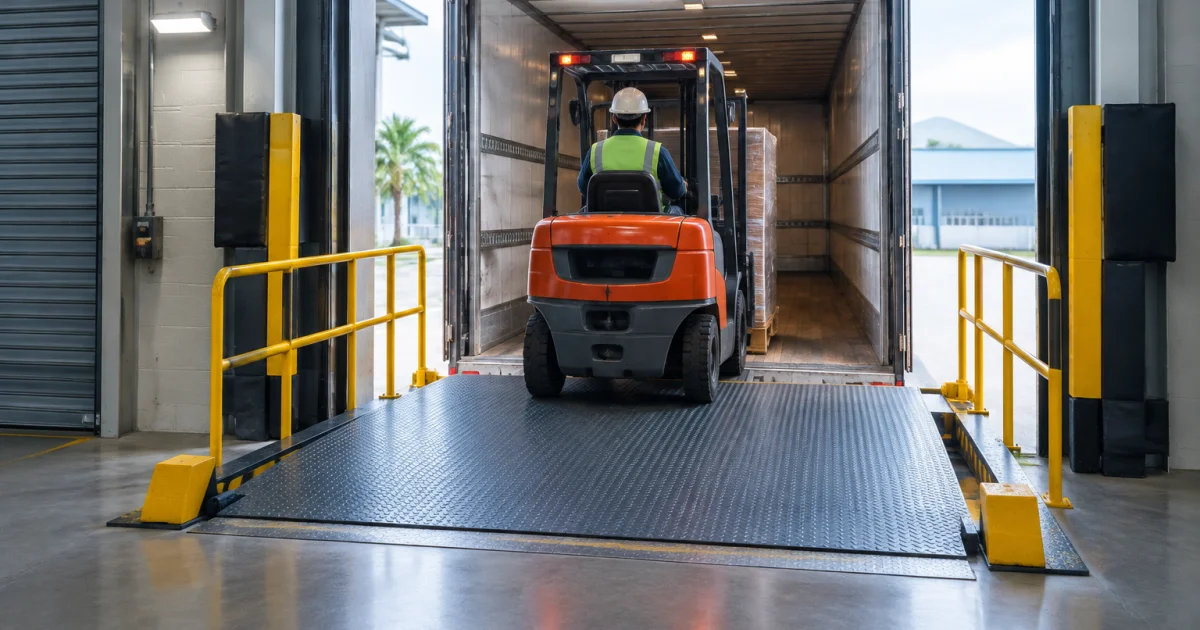
Loading bays are where “small” equipment issues become big operational incidents: damaged goods, forklift tip hazards, trailer creep, and injuries caused by gaps, poor communication, or rushed turnarounds. For warehouses, distribution centres, and logistics operators in Malaysia, that reality is driving a steady wave of practical safety and compliance updates—often not by changing the entire dock, but by tightening the system around it.
This article focuses on Hydraulic Dock Levelers and the common updates facilities teams are prioritising: controls that reduce human error, safeguards that address known pinch and fall risks, checks that make audits easier, and integration with dock sealing and access doors for better environmental control. The goal is to help you evaluate upgrade options with an “uptime + safety” mindset, not just a specification checklist.
Why safety updates are accelerating at the loading bay
In many sites, dock incidents don’t come from one dramatic failure—they come from small deviations: a trailer not properly restrained, a lip not fully seated, a forklift approaching at an angle, or a worker stepping into the void because the edge is poorly marked. Facilities teams are prioritising improvements that make the correct sequence the easiest sequence.
Several operational pressures amplify the need for better controls:
- Higher traffic intensity: More truck movements and mixed fleets (different bed heights) raise the chances of mis-leveling and rushed loading.
- Mixed users: Temporary workers, third-party drivers, and multi-shift operations increase variation in operator behaviour.
- Audit readiness: Safety reviews increasingly expect evidence: inspection logs, maintenance records, training, and documented lockout/tagout practices.
- Energy and hygiene expectations: Better dock sealing, pest control, and temperature separation put more focus on how dock equipment works as a system.
The practical takeaway: upgrades that reduce reliance on memory—via interlocks, indicators, and standardised procedures—tend to provide strong safety value without disrupting throughput.
Priority updates: controls, interlocks, and safer operating sequences
One of the most common safety themes is preventing the dock leveler from being operated at the wrong time or in the wrong condition. Facilities teams are looking for control approaches that guide an operator through a safe sequence and provide clear feedback on status.
Common control and interlock improvements
- Clearly labeled, protected controls: Controls positioned to maintain visibility of the dock edge and trailer, with protected buttons to reduce accidental activation.
- Status indication: Visual indicators that communicate whether the leveler is in service, stored, or undergoing maintenance—supporting safer handoffs between shifts.
- Vehicle restraint and wheel chock discipline: Where sites use restraints or procedural chocking, teams increasingly formalise “no restraint/no operation” rules to prevent trailer creep and early departure.
- Door/leveler sequencing: A common best practice is ensuring the trailer is secured and the dock door is in the correct state before the leveler is put into service, reducing exposure to fall hazards and unplanned movement.
Even without changing the leveler, you can often improve safety by standardising the sequence: confirm trailer secured, communicate with the driver, open door, deploy leveler, begin loading, then reverse the process with a clear “all clear” sign-off. Facilities teams are prioritising procedures that are easy to train and hard to bypass.
Physical safety features: reducing falls, pinch points, and impact damage
Hydraulic systems can be robust for frequent cycles, but the loading bay remains a high-risk interface. Facilities teams are investing in physical safeguards that reduce injury exposure and also protect equipment from daily impacts.
Edge-of-dock and pit-area risk controls
- Dock edge awareness: High-visibility markings and clear demarcation of pedestrian routes to keep foot traffic away from active loading zones.
- Guarding where practical: Barriers, chains, or safety rails in areas with recurring pedestrian exposure, especially when doors are open but no trailer is present.
- Housekeeping and drainage: Slip resistance and clean pits reduce missteps; water ingress and debris can also accelerate corrosion and component wear.
Impact protection and dock durability
Loading bays take repeated impacts from reversing trailers and handling equipment. Protection upgrades are often simple but effective:
- Dock bumpers and fenders: Rubber protection helps absorb impact and reduce structural and equipment damage.
- Improved approach discipline: Floor markings and driver guidance reduce off-centre trailer contact that can stress the dock face and leveler alignment.
- Leveler-to-truck interface checks: Ensuring the lip seats properly and the transition is smooth reduces shock loads on forklifts and the platform.
When evaluating solutions, consider not just the leveler’s capacity, but the dock’s protective ecosystem. For example, IGT Group’s loading bay product range includes equipment that supports safer, more consistent dock operation as a whole.
Maintenance and documentation updates that support compliance (and uptime)
Facilities teams are increasingly treating compliance as a process rather than a once-a-year audit task. That means aligning maintenance routines with the actual risk points at the dock: uncontrolled movement, worn hinge points, oil leaks, slow response, and unsafe manual work during troubleshooting.
What teams are formalising in preventive maintenance
- Scheduled inspections: Routine checks for hydraulic leaks, unusual noise, uneven platform movement, and worn structural elements.
- Functional safety checks: Verifying emergency stops (where fitted), control responsiveness, and safe return-to-stored operation.
- Cleaning and pit condition: Removing debris that can obstruct moving parts or create trip hazards; maintaining pit integrity and drainage.
- Training refreshers: Short, recurring briefings to keep operators aligned on safe sequences and reporting rules.
- Lockout/tagout discipline: Clear isolation practices for any work under or around moving dock equipment.
Documentation is a frequent weak spot. Facilities teams are prioritising simple, repeatable records: inspection checklists, corrective actions, and service histories that make it easier to show due diligence and to spot patterns (for example, repeated damage at one bay indicating a traffic or driver alignment issue).
If you’re comparing equipment or service partners, ask how they support ongoing inspection and repairs—availability of genuine spare parts, technician response, and whether they can help you move from reactive fixes to preventive maintenance.
Dock environment integration: dock shelter, doors, and traffic flow
Safety and compliance updates increasingly consider the dock as a connected system: the leveler, the vehicle interface, the opening, and the pathway into the facility. This is where environmental separation and efficient traffic flow can also reduce risk.
Where a Loading Dock Shelter fits into safety priorities
A Loading Dock Shelter helps reduce air exchange, dust, and pest entry at the trailer interface—particularly important for food handling, clean operations, and sites trying to keep a stable indoor environment. But it also supports operational consistency: better sealing can encourage more repeatable trailer positioning and reduce “quick in, quick out” shortcuts that compromise safe setup.
When considering a shelter, ensure it complements the dock layout and does not create visibility issues or obstructions during reversing. A good system-level approach is to evaluate shelter condition alongside bumpers, restraints/chocks, lighting, and leveler operation. If you’re exploring options, see Easyshelter Dock Shelter for an example of dock sealing equipment used in industrial bays.
Door coordination: keeping the “dock line” controlled
Facilities teams often pair dock leveler upgrades with door improvements to reduce uncontrolled openings and improve workflow. Two common considerations:
- Speed and separation: High-traffic sites may prefer faster door cycles to reduce the time the opening is exposed, supporting safer temperature and dust control between zones.
- Space and security: In some bays, an overhead sectional configuration can help with space efficiency while maintaining a secure closure when the bay is not in use.
Depending on your facility layout, it can be useful to assess doors as part of the dock safety review—especially where internal routes cross the dock line. Related options include Easyrapid Roll Up Door for high-traffic access and Easylift Overhead Sectional Door for secure, space-saving openings.
A practical evaluation checklist for your next dock leveler upgrade
If you’re investigating upgrades, align stakeholders early: facilities, operations, EHS, and maintenance. The best specifications are the ones that match how the dock is actually used.
Use the checklist below to structure discussions with suppliers and your internal team:
- Usage profile: How many cycles per day? What vehicle mix? Any peak congestion windows?
- Main incident risks: Trailer creep? Early departure? Forklift shock loads? Pedestrian exposure?
- Operator clarity: Are controls visible and intuitive? Is there clear status indication and a standard operating sequence?
- Interface quality: Does the platform/lip create a smooth transition? Is the bay designed to reduce angled approaches?
- Service access and downtime planning: How quickly can common wear parts be serviced? What is your plan for corrective repairs?
- Integration: Will the dock shelter, bumpers/fenders, and doors work together without creating blind spots or obstructions?
- Documentation: Can you maintain inspection logs, service reports, and operator training records consistently?
When you standardise this evaluation across bays, you often find easy wins: a subset of bays may need additional guarding and signage, while others benefit more from improved restraints and a tighter operating sequence.
Conclusion: facilities teams are prioritising “system safety,” not single components
Most meaningful improvements to dock safety come from treating the loading bay as an integrated system: equipment that performs reliably under traffic, procedures that reduce variation, and physical safeguards that prevent predictable mistakes from becoming incidents. For Hydraulic Dock Levelers, the common priorities are clear—better sequencing and interlocks, stronger edge-of-dock controls, disciplined preventive maintenance, and smarter integration with dock sealing and door operations.
If you’re planning an upgrade, focus on changes that make safe behaviour automatic and verifiable. That approach improves compliance readiness and typically reduces downtime too—because fewer incidents and fewer “mystery faults” mean smoother operations day after day.
Frequently Asked Questions
What are the most common safety risks with hydraulic dock levelers?
Common risks include trailer creep or early departure, poor lip seating that creates a sudden drop, forklift shock loads from uneven transitions, falls at the open dock edge, and pinch/crush hazards during servicing. Most facilities reduce these risks through a clear operating sequence, visible status indicators, physical edge protection, and disciplined preventive maintenance.
How do facilities teams support compliance for dock leveler inspections?
They typically formalise a routine that includes scheduled visual checks, functional tests, housekeeping of the pit area, and documented corrective actions. Keeping consistent inspection logs, service reports, and operator training records helps demonstrate that risks are being managed continuously rather than only during audits.
When should a loading dock shelter be reviewed as part of a dock safety update?
Review a Loading Dock Shelter when you see dust/pest entry, temperature loss, or inconsistent trailer positioning. A shelter can improve environmental separation and encourage more repeatable docking, but it should be selected and installed so it doesn’t obstruct visibility or interfere with safe reversing, restraints, or dock equipment operation.
Can dock doors affect loading bay safety and efficiency?
Yes. Door choice and operation influence how long the opening is exposed, how pedestrians and forklifts move around the bay, and how well you maintain separation between zones. In busy docks, pairing leveler improvements with suitable door solutions—such as high-speed roll-up doors for frequent traffic or overhead sectional doors for secure closures—can support safer, more consistent workflows.
What should I ask a supplier before upgrading dock leveler equipment?
Ask about the recommended operating sequence and any interlocks, how the solution addresses trailer movement risks, what preventive maintenance looks like (including spare parts and service response), and how the dock leveler will integrate with bumpers/fenders, dock shelter sealing, and door operations. Also confirm what documentation you’ll receive to support inspection records and ongoing compliance.
Make your loading bay safer—with a dock system that’s easier to manage
If you’re reviewing safety and compliance updates around hydraulic dock levelers, IGT Group can help you assess your loading bays as a complete system—dock levellers, shelters, protection, and access doors—so improvements support both safety and uptime. From consultation to installation, maintenance, and repair, our team focuses on industrial environments where high traffic leaves little room for downtime.